
You have about two feet of counter between the stove and the fridge, and the toaster already claims half of it. You want better coffee in the morning, and every search leads to the same question: compact drip maker vs French press. One plugs in and runs itself. The other is a glass pitcher that disappears into a cabinet but needs your attention for a few minutes. Both make real coffee, and the trade-offs matter more when space is tight.
Disclosure: As an Amazon Associate, CompactBrew.com earns from qualifying purchases. If you buy through links on our site, we may earn a commission at no extra cost to you.
This guide compares the two on what actually affects a small kitchen: footprint, storage, cleanup, cost, and how each fits a one- or two-person routine. It draws on published brewing guidance and retailer listings, not hands-on testing, and it says where each number comes from.
Quick Answer: Compact Drip Maker vs French Press
Neither one wins for everybody. The right pick depends on whether you value convenience or control, and how much counter space you can give up permanently.
Choose a compact drip maker if you want coffee with almost no effort, like the idea of a programmable timer, or prefer a cleaner, lighter cup. The trade-off is a permanent spot on the counter and an outlet.
Choose a French press if you like a fuller-bodied cup, want to spend less, or don’t want another appliance. It lives in a cabinet, but you need a way to heat water, a few minutes of attention, and a messier cleanup.

- 4-Cup 20Oz Capacity & 650W Power – Ideal for Small Families & Gatherings: This 4-cup mini drip coffee maker features a 2…
- Anti-Drip Coffee Maker – Pause & Serve Without Mess: Designed with a convenient anti-drip switch, this drip coffee maker…
- Automatic Keep Warm – Always Enjoy Hot Coffee:This 4-cup drip coffee maker retains optimal temperature post-brewing, ens…
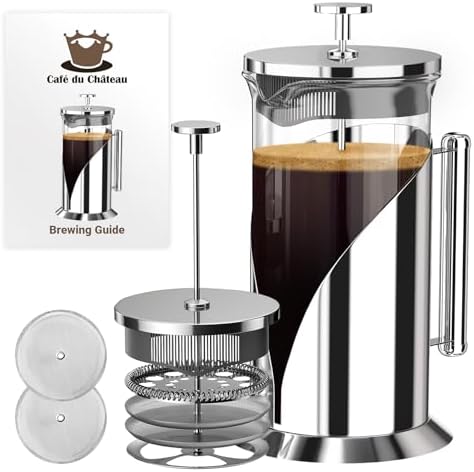
- QUALITY BREW WITH 4-LEVEL FILTRATION: This French press coffee maker is built for flavor, using a 4-level stainless stee…
- EASY TO USE MANUAL PRESS: Designed for simplicity, this French press makes brewing effortless. Just add your favorite co…
- DURABLE DESIGN FOR HOME & OUTDOORS: Made from borosilicate glass with a reinforced plastic frame and sturdy handle, this…
Compact Drip Maker vs French Press: Quick Comparison Table
| Factor | Compact drip maker | French press |
|---|---|---|
| Brewing method | Hot water drips over grounds in a filter basket | Grounds steep in hot water, then a mesh plunger presses them down |
| Coffee taste | Clean, bright, approachable | Richer, deeper, more robust |
| Coffee body | Lighter with a paper filter | Heavier, fuller mouthfeel |
| Grind size | Medium (like kosher salt) | Coarse (like rock salt) |
| Brewing time | About 5 minutes of water-to-coffee contact; the machine runs on its own | About 4 minutes of steeping, plus heating water and plunging |
| Hands-on effort | Low: fill, add coffee, flip the switch | Moderate: heat water, measure, time, stir, plunge |
| Capacity | Compact models are commonly 4 to 5 cups (about 20 to 25 oz) | Sizes from about 12 oz up to 34 oz and larger |
| Counter space | Permanent spot plus outlet access | Stores in a cabinet; needs a kettle or pot for hot water |
| Portability | Stays put | Easy to carry, as long as hot water is available |
| Cleaning | Rinse basket and carafe; descale periodically | Empty grounds, wash mesh filter and plunger every time |
| Upfront cost | Roughly $20 to $40 for basic 5-cup models | Roughly $20 to $45 for common 34 oz models |
| Ongoing costs | Paper filters unless the machine has a reusable basket | No paper filters |
| Electricity usage | Plugs in while brewing | None for the press itself; depends on how you heat water |
Prices come from retailer listings checked in November 2026 and move around. Always confirm the current price before you buy.
How a Compact Drip Coffee Maker Works
A drip maker heats water and drips it over ground coffee in a filter basket. Gravity pulls the brewed coffee through the filter into a carafe. The National Coffee Association’s drip coffee guide notes that this method is popular in the U.S. because it is convenient and produces consistent, bright-tasting coffee.
“Compact” mostly means a smaller water reservoir. In coffee-maker math, one “cup” is 5 fluid ounces, so a 5-cup machine brews about 25 ounces. That is roughly two 12-ounce mugs.
The NCA suggests a medium grind and about one to two tablespoons of ground coffee per 6 ounces of water, with around five minutes of contact time. The machine controls that contact time, which is the trade-off: very consistent results, but little room to adjust. Filter basket shape also plays a role. A flat-bottom basket lets water through faster for a smoother, milder cup, while a cone slows the flow for a richer, more complex one.
How a French Press Works
A French press uses immersion brewing. Coarse grounds sit in hot water for a few minutes, then a plunger with a metal mesh screen pushes them to the bottom. There is no paper filter and no electricity involved.
The Specialty Coffee Association’s three-cup French press brewing guide offers a solid baseline for a 22-ounce press: 36 grams of medium-coarse coffee, 660 grams of water at 200°F, and a four-minute brew. You then press the plunger slowly and pour the coffee out right away.
Because you add the water yourself, you decide the temperature and the steep time, as Breville points out in its comparison. That control has a downside. Steeping too long can make the coffee bitter, and a beginner’s first few cups may vary.
Taste Comparison: Which Makes Better Coffee?
Taste is where this debate usually starts, and it is also where honest answers get personal. When people compare drip coffee vs French press taste, the difference is mostly the filter and the brewing style.
Clean and Smooth vs. Full-Bodied and Rich
Paper filters trap oils and fine particles, so drip coffee tends to taste cleaner and lighter. A French press screen lets more oils and fine particles through, so the cup usually feels heavier and tastes richer. Breville’s drip vs. French press comparison describes drip as milder and approachable, and French press as deeper and more intense.
Consumer Reports reached a similar conclusion in a small test with expert tasters. They found French press flavorful and full-bodied, while a typical auto-drip cup came out slightly sharper and less complex. They also said that if convenience matters more than perfection, auto-drip is a reasonable choice.
Oils and Sediment
Fine grounds can slip past a French press screen, which leaves a little silt at the bottom of the mug and a slightly thick texture. If you hate sediment, drip is the safer bet.
One expert quoted in Martha Stewart’s French press vs. drip comparison also notes that paper filters trap diterpenes, oily compounds that can raise LDL cholesterol for some people. That is not a reason for most people to switch, but if cholesterol is a concern, ask your doctor which method suits you.
What Matters as Much as the Brewer
- Beans and freshness: Fresh whole beans ground right before brewing make a bigger difference than most equipment upgrades.
- Grind size: Match it to the method. The NCA says bitter or sour coffee often means the grind is too fine, and flat or watery coffee often means it is too coarse.
- Water: Consumer Reports recommends filtered water heated to between 195°F and 205°F.
- Technique: Consumer Reports suggests weighing your coffee and timing the brew. That matters most with a French press, since you control the timing yourself.
Strong Coffee vs. Caffeine
“Strong” can mean bold flavor or high caffeine, and those are not the same thing. A French press cup tastes more intense because of body and oils. We could not find a source showing that either method reliably delivers more caffeine, so we won’t claim it. In both cases, strength mostly comes down to how much coffee you use per cup.
- 4-Cup 20Oz Capacity & 650W Power – Ideal for Small Families & Gatherings: This 4-cup mini drip coffee maker features a 2…
- Anti-Drip Coffee Maker – Pause & Serve Without Mess: Designed with a convenient anti-drip switch, this drip coffee maker…
- Automatic Keep Warm – Always Enjoy Hot Coffee:This 4-cup drip coffee maker retains optimal temperature post-brewing, ens…
- QUALITY BREW WITH 4-LEVEL FILTRATION: This French press coffee maker is built for flavor, using a 4-level stainless stee…
- EASY TO USE MANUAL PRESS: Designed for simplicity, this French press makes brewing effortless. Just add your favorite co…
- DURABLE DESIGN FOR HOME & OUTDOORS: Made from borosilicate glass with a reinforced plastic frame and sturdy handle, this…
Which Is Better for Small Kitchens?
If you are shopping for the best coffee maker for a small kitchen, the compact drip coffee maker vs French press question comes down to a few practical details. Here is how each fits when every inch counts.
Countertop Footprint
Published specs for the compact drip makers we reviewed list heights of about 10 to 11 inches, widths of 6 to 7 inches, and depths of 8 to 9 inches. A popular 34-ounce French press is listed at about 9.5 inches tall and 6.5 inches across. The numbers look similar, but the difference is where each one lives. The drip maker stays on the counter. The press can go back in a cabinet.
Cabinet Storage
A French press is easy to stow, and it is simple to move to a shelf when you need counter space for cooking. A drip maker is not hard to store, but most people leave it out, so plan for it as a permanent resident.
Water Filling and Carafe Handling
Check how a drip maker fills and how much clearance its lid needs, and measure the space under your upper cabinets before you buy. With a French press, you need hot water, which means a kettle or a pot on the stove. If you don’t own a kettle yet, that is another item and another bit of counter space. Glass carafes and glass presses both need careful handling near a sink.
Kitchen Clutter
A drip maker adds a cord and an appliance. A French press adds a kettle and a spot to put wet grounds. Either way, a grinder is a useful extra. Neither is clutter-free, which is why the honest answer depends on what you already own. If you are choosing a coffee maker for a small apartment, our guide to choosing a coffee maker for small spaces covers measuring and layout in more detail.
Which Is Better for One Person or Two People?
French Press or Drip Coffee for One Person
For one mug a day, a small French press is a good match when you compare a French press vs small drip coffee maker: a 12-ounce press makes about a mug, with no extra coffee sitting around. A compact drip maker works too. Using the NCA’s ratio, one 12-ounce mug needs roughly two to four tablespoons of ground coffee, but you may be filling a reservoir sized for two mugs.
Two People and Small Batches
A 5-cup drip maker brews about 25 ounces in one pass, which covers two 12-ounce mugs. A larger French press can make a similar amount, but each batch takes another round of heating, steeping and cleanup. If two people drink coffee at the same time every morning, drip is easier. If you want to see more options, take a look at our picks of compact coffee makers for two people.
Avoiding Wasted Coffee
Brew what you will drink. Coffee left on a warming plate or sitting on the press grounds does not improve. If you won’t finish the pot, pour the extra into a thermal mug right away.
Convenience and Morning Routine
Drip wins on speed and consistency. You fill the reservoir, add coffee, and flip a switch. Many models also have a timer, so you can wake up to fresh coffee, as Breville notes.
A French press takes more steps: heat water, grind coffee, pour, wait four minutes, plunge, pour, and rinse. Some people enjoy that slower routine as a small ritual, and others find it a chore at 6:45 a.m. Be honest about which morning person you are.
Drip Coffee Maker vs French Press Cost
Initial Equipment Costs
In November 2026, basic 5-cup drip makers at major retailers were listed at roughly $20 to $40, and common 34-ounce French presses at roughly $20 to $45. Overall, drip machines usually cost more than presses, as the Martha Stewart piece points out, but entry-level compact models narrow the gap. Premium drip machines cost considerably more.
Filters and Reusable Options
Paper filters in the listings we checked ran from about a cent or two to about six cents each. At one pot a day, that is roughly $4 to $22 a year. Some drip makers include a reusable metal basket. The NCA says metal filters cost more up front, save on paper over time, and let more oil and sediment into the cup, which can mean a more intense taste and texture. A French press uses a reusable screen from day one.
Coffee Grounds
Both methods cost about the same per cup in coffee. Both also benefit from fresh whole beans and a burr grinder, which Consumer Reports and the NCA both recommend for even grinding. That grinder is a shared expense, not a point for either side.
Electricity and Maintenance
A compact drip maker uses power while it brews and while a hot plate stays on. A French press uses whatever you heat your water with. Neither is likely to matter much on a monthly bill, though we didn’t find reliable numbers to give you a precise figure. Drip makers also need descaling. The NCA says manufacturers recommend doing it every three to six months.
Long-Term Value
Both are inexpensive to own. A press has fewer parts to fail, though glass can crack. A drip maker adds convenience that some people value every day. Choose on routine, not on a few dollars.

- 3 WAYS TO BREW: Brew a single cup with a pod or coffee grounds or brew up to 12 cups using your favorite ground coffee. …
- FAST BREWING — BREW A SINGLE CUP IN ABOUT 90 SECONDS. In the morning, every second counts. Unlike 3 way coffee makers of…
- BREW 7 SINGLE SERVINGS WITHOUT REFILLING THE 56 OZ. WATER RESERVOIR. Brew a single cup of coffee without stopping to pou…

- Keep Coffee Hot for Hours: Designed with true vacuum insulation from the bottom to the spout, Tiken coffee press keeps y…
- Built to Last: This insulated French press body is constructed with durable 18/8 food-grade stainless steel both interio…
- Clean & Flavorful Coffee: Our innovative filter with enhanced mesh filter can create a better barrier against coffee gro…
Cleaning and Maintenance
Compact Drip Maker
Rinse the filter basket and wash the carafe after use, wipe up spills on the hot plate once it cools, and descale on a schedule. The NCA notes that coffee oil can build up and make later cups taste bitter, so a quick routine pays off.
French Press
Cleanup is more involved because you have to empty wet grounds, rinse the mesh filter, and wash the plunger. An expert in the Martha Stewart article describes cleanup as more involved and messy than with drip. One tip is to use a mesh drain cover so you can dump grounds, then toss them in the trash or compost instead of letting them clog the drain.
Grounds and Waste
Both methods produce spent grounds. Drip also produces a paper filter, though the NCA notes compostable options exist. A French press produces less waste but more mess in the sink.
- 3 WAYS TO BREW: Brew a single cup with a pod or coffee grounds or brew up to 12 cups using your favorite ground coffee. …
- FAST BREWING — BREW A SINGLE CUP IN ABOUT 90 SECONDS. In the morning, every second counts. Unlike 3 way coffee makers of…
- BREW 7 SINGLE SERVINGS WITHOUT REFILLING THE 56 OZ. WATER RESERVOIR. Brew a single cup of coffee without stopping to pou…
Pros and Cons of Compact Drip Makers
Pros
- Easy and consistent, with very little hands-on time
- Programmable timers on many models
- Clean, lighter cup with little sediment
- Brews a pot for two in one pass
Cons
- Takes up permanent counter space and needs an outlet
- Less control over water temperature and brew time
- Paper filters add a small ongoing cost
- Needs periodic descaling
For more on this style, see our guide to the best small drip coffee makers.
Pros and Cons of French Press
To round out the French press vs drip coffee pros and cons, here is the press side.
Pros
- Full-bodied, rich cup
- Low upfront cost and no filters to buy
- No electricity and easy to store or travel with
- Control over temperature and steep time
Cons
- Needs hot water, attention, and timing
- Silt in the cup and messier cleanup
- Results can vary until you learn the routine
- Coffee should be poured out soon after plunging
- Keep Coffee Hot for Hours: Designed with true vacuum insulation from the bottom to the spout, Tiken coffee press keeps y…
- Built to Last: This insulated French press body is constructed with durable 18/8 food-grade stainless steel both interio…
- Clean & Flavorful Coffee: Our innovative filter with enhanced mesh filter can create a better barrier against coffee gro…
Which One Should You Choose?
Busy Mornings
Choose a compact drip maker, ideally with a timer.
Small Apartments
A French press wins on storage if you already own a kettle. A drip maker is fine if you have a spot for it. Mini coffee makers for everyday use are worth a look if you want a smaller machine.
One-Person Households
Either works. A small French press avoids extra coffee, while a 4-cup drip maker is easier on a rushed day.
Two-Person Households
A 5-cup drip maker handles two mugs in one pass with less work.
Rich Coffee Lovers
Try a French press for the fuller body. If you want more control in a compact machine, browse coffee makers for coffee lovers.
People Who Prefer Clean, Lighter Coffee
Go with drip and a paper filter.
Budget-Conscious Buyers
A French press is usually cheapest, but a basic compact drip maker is close.
People Who Don’t Want Electrical Appliances
A French press and a stovetop kettle keep things simple.
Frequently Asked Questions
Is French press coffee stronger than drip coffee?
It usually tastes bolder and heavier. Actual strength depends mostly on how much coffee you use, and you can adjust either method.
Does French press coffee taste better than drip?
It depends on your preference. French press is richer and fuller. Drip is cleaner and lighter. Many people like both.
Is a French press cheaper than a compact drip maker?
Usually, though basic compact drip makers and common French presses were close in price in the listings we checked. A press also skips paper filters.
Which coffee maker is easier to clean?
Drip is generally easier day to day. A French press means emptying wet grounds and washing a mesh filter every time.
Is a French press good for small kitchens?
Yes, because it stores in a cabinet. Remember you will still need a kettle or pot to heat water.
Which is better for one person?
A small French press suits a single daily mug, and a compact drip maker suits someone who wants the easiest routine.
Does French press coffee contain more caffeine?
We could not confirm that either method reliably has more caffeine, so we won’t claim it. Caffeine depends on the coffee and how much you use.
Can a compact drip maker make good coffee?
Yes. Fresh beans, the right grind, and clean equipment matter more than size. Look for a model that heats water properly, since Consumer Reports puts the ideal brewing range at 195°F to 205°F.
- 3 WAYS TO BREW: Brew a single cup with a pod or coffee grounds or brew up to 12 cups using your favorite ground coffee. …
- FAST BREWING — BREW A SINGLE CUP IN ABOUT 90 SECONDS. In the morning, every second counts. Unlike 3 way coffee makers of…
- BREW 7 SINGLE SERVINGS WITHOUT REFILLING THE 56 OZ. WATER RESERVOIR. Brew a single cup of coffee without stopping to pou…
- Keep Coffee Hot for Hours: Designed with true vacuum insulation from the bottom to the spout, Tiken coffee press keeps y…
- Built to Last: This insulated French press body is constructed with durable 18/8 food-grade stainless steel both interio…
- Clean & Flavorful Coffee: Our innovative filter with enhanced mesh filter can create a better barrier against coffee gro…
Final Verdict
The real difference is not good coffee versus bad coffee. It is how much effort you want to spend and what you want in the cup. A compact drip maker trades counter space for ease and consistency. A French press trades a few minutes and some cleanup for body, low cost, and cabinet storage.
If your mornings are rushed or you share a pot with someone, start with drip. If you want a richer cup and have a kettle, try a French press first, since it costs little to find out. Measure your counter, count your daily mugs, think about your budget, and pick the one you will actually use.