

Every coffee maker has to do two jobs: fit your kitchen and make enough coffee before your day gets going. A small machine wins the first job. A big one wins the second. The tension between them is the whole debate over compact vs full-size coffee makers.
The short answer: choose a compact coffee maker if you pour one to two mugs a day, share a small kitchen, or hate pouring out leftover coffee. Choose a full-size machine if you brew for three or more people, drink coffee in long stretches through the morning, or host guests often. Size does not decide how good the coffee tastes. We’ll explain why below.
This guide compares the two side by side. It covers real brewing capacity (those “cup” ratings are misleading), counter and cabinet space, cost, cleaning, and who each type suits. You’ll also find a measuring checklist and a quick decision table, so you can settle the question before you buy.
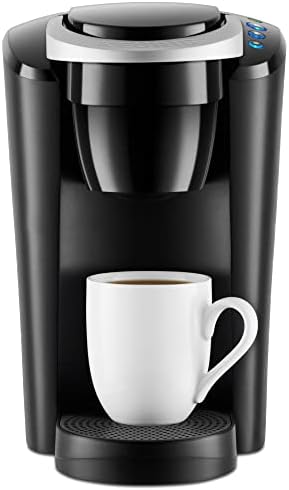
- BREWS MULTIPLE CUP SIZES: (6, 8, 10 oz.). Enjoy the most popular cup sizes. Use the 6 oz. cup size to achieve the strong…
- FAST & FRESH BREWED: Coffee made in minutes.
- A COMPACT MULTI-CUP RESERVOIR: 36 oz. removable water reservoir make refilling easy.

- 4-LAYER VACUUM SEALED THERMAL CARAFE: Double-walled 4-layer carafe keeps coffee hot for up to two hours—no warming plate…
- PROGRAMMABLE BREWING WITH AUTO-SHUTOFF: Program the 24-hour auto brew to enjoy fresh coffee anytime. After brewing, heat…
- VORTEX TECHNOLOGY: Exclusive showerhead design evenly saturates coffee grounds for optimal extraction, delivering full-b…
Compact vs Full-Size Coffee Makers: What’s the Difference?
No official standard defines “compact” or “full-size.” For this guide, the split is simple: a compact machine is built to save space and serve one or a few people, while a full-size machine is built to brew a whole pot. Plenty of models sit in between, so always check the spec sheet for the exact model you’re eyeing.
What Is a Compact Coffee Maker?
A compact coffee maker has a small footprint and a small brew size. In this article, that includes single-serve pod machines, mini drip brewers, and small carafe models, usually in the range of roughly one to five “cups” (an editorial range, not an industry rule).
Most are simple. You fill a small reservoir, add coffee, and brew. Many suit one or two people, and some brew straight into your mug. Space-saving can also come from slim design, not just low capacity, so two compact machines can behave very differently.
What Is a Full-Size Coffee Maker?
A full-size coffee maker brews a full carafe in one cycle. Typical drip models are labeled roughly 8 to 14 cups, and Consumer Reports’ own ratings include 12- and 14-cup machines. These tend to be wider and taller, with a larger water tank and a glass or thermal carafe.
They also tend to carry more conveniences, like programming and brew-strength controls. Programmability is now common on most drip models, though, so it shouldn’t be the reason you size up.
What a “Cup” Really Means
This trips up many buyers. On many drip machines, one “cup” is about 5 fluid ounces, not the 8 ounces of a kitchen measuring cup. By that math, a 12-cup machine brews about 60 fl oz and a 5-cup machine about 25 fl oz. Some brands use different sizes (a Moccamaster 10-cup, for example, is listed at 1.25 liters), so check your manual.
Now translate it into mugs. A 12-ounce mug is more than two “cups.” So a 12-cup pot fills about five 12-ounce mugs, and a 5-cup pot fills only about two.

- Make Your Favorite Espresso Coffee At Home: The CASABREWS coffee machine with milk frother allows you to prepare all you…
- Professional 20 Bar Pressure System: Semi-Automatic 2-in-1 Espresso Maker, with 20 bar professional Italian pump and 135…
- Milk Frothing System: Our espresso machine with milk frother has a powerful steam wand, so you can texture creamy, rich …

- 12-CUP DURALIFE GLASS CARAFE: The sturdy 12-cup* carafe has measurement markings for accurate filling and an easy-grip h…
- SNEAK-A-CUP FEATURE TO PREVENT DRIPS: This feature temporarily stops the flow of coffee so you can pour your first cup b…
- EASY-VIEW WATER WINDOW: The front-facing window shows you the exact amount of water that will turn into coffee, and the …
Compact vs Full-Size Coffee Makers Compared
Use this coffee maker size comparison as a starting point. Ranges are approximate editorial estimates, and capacities assume the common 5 fl oz “cup.” Always confirm dimensions and capacity on the manufacturer’s spec sheet.
| Factor | Compact | Full-size |
|---|---|---|
| Typical size | Roughly 1-5 “cups” or single-serve (approximate) | Roughly 8-14 “cups” (approximate) |
| Counter footprint | Smaller and often slimmer; still check height with the lid open | Wider and taller; check upper-cabinet clearance |
| Brewing capacity | About 5-25 fl oz per cycle at 5 fl oz per cup | About 40-70 fl oz per cycle at 5 fl oz per cup |
| People served | One or two | Three or more |
| Water reservoir | Smaller; repeat brews may mean refills | Holds a full batch; one fill per pot |
| Brewing convenience | Fast for one mug; extra brews for each additional person | One cycle fills many mugs; a full pot takes longer than one mug |
| Features | Usually simpler, though it varies by model | More likely to offer programming, strength control, thermal carafes |
| Storage | Easy to tuck away or move | Bulky; tends to live on the counter |
| Cleaning | Fewer and smaller parts, but tight spots can be fiddly | Larger carafe and basket; dishwasher-safe parts vary |
| Price considerations | Wide range; not always cheaper | Wide range; batch brewing can lower cost per mug |
| Best use case | One person, small kitchens, desks | Families, guests, heavy drinkers |
One caution on speed. In Consumer Reports’ coffee maker ratings, a top drip model brews a full pot in about six minutes, while a slower pick takes about twelve. A bigger machine is not automatically a faster one.
Pros and Cons of Compact Coffee Makers
These compact coffee makers pros and cons depend on how you drink coffee. The same trait, such as a small tank, can be a perk for one person and a headache for four.
Advantages of Compact Coffee Makers
- They save space. The obvious benefit. A smaller body leaves room for a toaster, a cutting board, or nothing at all. If your counter is tight, our guide to compact coffee makers for small kitchens shows what fits.
- They match one-mug routines. If you drink one or two mugs, you brew what you’ll drink.
- They cut coffee waste. Smaller batches mean less coffee sitting on a warming plate and fewer dumped half-pots.
- They’re easy to move or store. A lighter machine can head into a cabinet, a dorm room, or a desk drawer. Browse mini coffee makers for everyday use if portability matters.
- They keep things simple. Fewer settings means less to learn, and often less to clean.
Disadvantages of Compact Coffee Makers
- Smaller capacity. A 5-cup pot is only about two 12-ounce mugs. Brewing for guests means running it again.
- Repeat brewing for several people. Each cycle adds time. Three people at 7:30 a.m. will notice.
- Refills. Smaller reservoirs may need topping up more often. Capacity varies a lot by model, so check the tank size.
- Fewer features on some models. You may give up programming, a thermal carafe, or strength controls, though not every compact machine does.
- Pod costs can add up. Many of the smallest machines use pods, which often cost more per mug than ground coffee.

- Compact Design: The coffee machine is great for small kitchens or offices this coffee maker brews just the right amount …
- Pause & Brew Function: Enjoy the flexibility to pour a cup mid-brew without a mess with the small drip coffee maker. Thi…
- Keep Warm Feature: Maintain your coffee at the optimal temperature for up to 30 minutes after brewing with this compact …
Pros and Cons of Full-Size Coffee Makers
Full-size machines trade space for output. Here is how that trade plays out day to day.
Advantages of Full-Size Coffee Makers
- Batch brewing. One cycle fills several mugs. For a household where everyone wakes up at once, that is the biggest convenience.
- Fewer brew cycles. You press start once instead of three times. A full carafe also covers a second round of coffee without brewing again.
- A reservoir that holds a whole pot. Fill it once, brew, done.
- Good for guests. A 12-cup carafe holds about 60 fl oz, enough for roughly five 12-ounce mugs at the common 5 fl oz “cup” size.
- Useful extras. Programmable start times, strength settings, and thermal carafes are easier to find. Consumer Reports suggests a thermal carafe if you sip coffee over several hours, while noting that thermal carafes aren’t perfect.
Disadvantages of Full-Size Coffee Makers
- Counter space. They’re wider and taller, and may crowd a small counter or struggle under low cabinets.
- Storage. Putting one away between uses is a chore, so most stay out permanently.
- Too much coffee for light drinkers. Brewing a full pot for one mug wastes coffee and money. Check the manual for the machine’s minimum brew size.
- More to clean. A bigger carafe and basket take more room in the sink, and not every part is dishwasher-safe.
- Coffee that goes stale. A pot that sits on a hot plate for hours loses flavor. A thermal carafe helps, but it adds to the price.

- EASILY FILL FROM THE FRONT: In this 12 cup drip coffee machine, it's easy to add water and coffee grounds using the Fron…
- PROGRAMMABLE COFFEE MAKER WITH CLEANING CYCLE REMINDERS: This drip coffee maker can be easily programmed up to 24 hours …
- GET YOUR FIRST CUP FAST: With Auto Pause & Pour on this programmable Hamilton Beach coffee maker, you can pour yourself …
Does Coffee Taste Better in a Full-Size Coffee Maker?
Not automatically. Machine size doesn’t set flavor. A well-designed compact brewer can beat a mediocre full-size one, and the reverse is also true. If you’re asking whether a small coffee maker makes good coffee, these are the factors that matter:
- Water temperature. The Specialty Coffee Association is widely cited as recommending brew water of about 195-205°F. Consumer Reports tests how long each drip machine keeps water in that range, and it’s a better quality signal than capacity.
- Coffee-to-water ratio. SCA guidance is commonly summarized as about 55 grams of coffee per liter of water, or roughly 1:18. Scoop to the amount of water you’re brewing, not to a habit.
- Brewing consistency. Even saturation of the grounds and stable temperature from start to finish matter more than the carafe.
- Extraction time. Water needs enough contact time with the grounds. Too fast tastes thin and sour; too slow tastes bitter.
- Freshness. Freshly ground or recently roasted beans help more than any upgrade in machine size.
- Filter type. Paper filters give a cleaner cup, while metal filters let more oils through. Pick the one you like.
- Brewer design and quality. Spray-head design, heating element, and build quality vary by model, not by size class.
There is one size-related catch. A single-serve pod machine also uses a different brewing method than a drip machine, so compare like with like. So match the machine to your usual batch. For one mug, a compact brewer sized for one mug is the better fit. For a full pot, a full-size one is.
Which Coffee Maker Is Better for Your Household?
Start with your real routine, not the number on the box. Count mugs, then multiply by the mug’s volume. The scenarios below use 12 fl oz mugs and the common 5 fl oz “cup.”
Best Coffee Maker for One Person
A compact machine. One 12-ounce mug is a bit over two “cups,” so a single-serve brewer or a small drip model covers it without waste. If you want the best coffee maker for a small household of one, look at compact single-serve coffee makers and decide whether you’d rather buy pods or ground coffee.
The exception is someone who drinks four or five mugs spread across the day. Then a small drip machine with a thermal carafe may make more sense than a pod brewer you run repeatedly.
Best Coffee Maker for Two People
This is the coin-flip case, and it’s where people most often buy the wrong size. Two 12-ounce mugs is 24 fl oz, which is the whole output of a 5-cup pot. So a 5-cup machine works if you each have one mug, and it runs out if either of you wants a refill. Browse small drip coffee makers in the 5-6 cup range, or step up to a mid-size model if you each drink two mugs. When people ask what size coffee maker they need for two people, that’s the math to run.
Best Coffee Maker for Families
A full-size machine. At 8-12 cups, one cycle covers a family’s morning rush, and a programmable start lets coffee be ready when the alarm goes off. A family of four with one mug each needs about 48 fl oz, which fits inside a 10-cup pot. If you’re asking whether a full-size coffee maker is better for families, the answer is usually yes, because brewing three times is worse than counter space.
Best Coffee Maker for Small Apartments
Start with a compact machine, then check your cabinets. Our roundup of small coffee makers for limited counter space is built around that problem. If you live with a partner and both drink coffee, a slim 8-cup model can still beat a tiny one that you run twice.
Best Coffee Maker for Offices
It depends on the headcount. A single desk or a home office suits a compact brewer; see our picks of compact coffee makers for home offices. A shared break room with several people usually wants a full-size carafe machine, or a commercial brewer for a large team.
Best Coffee Maker for Heavy Coffee Drinkers
A full-size drip machine with a thermal carafe, if you drink coffee all morning. One pot, kept hot, beats re-brewing every hour. If you’d rather not leave a hot plate on, a thermal carafe is the way to go.
Compact vs Full-Size Coffee Makers: Cost Comparison
Compact doesn’t always mean cheaper. The total cost depends on the model and how you brew. Here is what to weigh.
- Purchase price. Both sizes come in budget and premium versions. Consumer Reports reports that you can brew a great cup with a machine under $100, and that a few good models cost under $50. That holds for either size. For compact options in that range, see our list of compact coffee makers under $100.
- Ground coffee vs pods. Many of the smallest machines use pods. Pods are convenient, but the coffee usually costs more per mug than ground coffee. To compare, divide the price of a pod box by its count, then divide a bag of grounds by the mugs you’ll get from it. Full-size drip machines use ground coffee, so batch brewing often wins on cost per mug.
- Filters. Drip machines use paper filters unless you buy a reusable one. Pod machines skip filters, but the pods themselves are the recurring cost.
- Maintenance and descaling. Both need regular cleaning and descaling as mineral buildup accumulates. Follow the manufacturer’s schedule. A small reservoir isn’t an excuse to skip it.
- Electricity. Don’t assume a compact machine saves energy. ENERGY STAR’s coffee brewer program covers commercial brewers and excludes household coffee makers, so there’s no household label to compare. Check the wattage and auto-shutoff on the spec sheet, and consider how long a machine keeps heat on after brewing.
- Coffee waste. Brewing a full pot you won’t finish is the most expensive mistake in either column. A compact machine sized to your habit can cost less overall, and a full-size one for a big household costs less per mug. The best value is the machine that fits your routine.
- Compact Design: The coffee machine is great for small kitchens or offices this coffee maker brews just the right amount …
- Pause & Brew Function: Enjoy the flexibility to pour a cup mid-brew without a mess with the small drip coffee maker. Thi…
- Keep Warm Feature: Maintain your coffee at the optimal temperature for up to 30 minutes after brewing with this compact …
- EASILY FILL FROM THE FRONT: In this 12 cup drip coffee machine, it's easy to add water and coffee grounds using the Fron…
- PROGRAMMABLE COFFEE MAKER WITH CLEANING CYCLE REMINDERS: This drip coffee maker can be easily programmed up to 24 hours …
- GET YOUR FIRST CUP FAST: With Auto Pause & Pour on this programmable Hamilton Beach coffee maker, you can pour yourself …
How Much Counter Space Do You Really Need?
Don’t trust “compact” or “full-size” on a product page. Measure your own space first. Consumer Reports advises accounting for a machine’s height as well as its width and depth, and many buyers forget the height. Use the spec sheet’s dimensions, not a photo, and take these measurements before you buy:
- Width. Measure the counter space you can spare, and leave a little room on each side for airflow and for setting a mug down.
- Depth. Check how far the machine sits from the wall. Check the spec sheet for any rear-clearance note.
- Height. Measure from the counter to the underside of the upper cabinet, then compare it with the machine’s height.
- Cabinet clearance with the lid open. Many drip machines have lids or water-tank covers that swing up. Add the open height, not just the closed height.
- Reservoir access. Check whether you fill the tank from the top, front, or side, or whether you need to pull it out. A top-fill tank under a low cabinet is a daily annoyance.
- Mug placement. Place your tallest travel mug where the spout or drip tray would be. Some compact machines have adjustable trays, and some don’t.
- Cleaning access. Leave room to remove the carafe, filter basket, and drip tray without moving the machine.
A quick test: cut a cardboard box to the machine’s listed width, depth, and height, and set it on your counter for a day. If it blocks your cutting space, a slimmer compact model may be worth the trade.
Common Mistakes When Choosing a Coffee Maker Size
- Buying on advertised cup capacity alone. A “10-cup” label often means about 50 fl oz, not ten full cups. Convert to ounces and then to mugs.
- Ignoring your actual mug size. A big 16-ounce travel mug is more than three “cups.” Measure what you really drink from.
- Forgetting cabinet clearance. A machine that fits the counter may still not fit once you open the lid or pull out the water tank.
- Buying too small for several drinkers. A compact machine that you run three times each morning costs you time, and the cost shows up daily.
- Buying a full-size brewer for one cup a day. You’ll pay for space and capacity you don’t use, and you’ll pour coffee down the drain.
- Ignoring refill convenience. A tiny tank you refill for every brew, or a heavy one you carry to the sink, becomes a chore fast.
- Choosing a machine that’s hard to clean. Narrow openings, hard-to-reach parts, and non-removable tanks make descaling and washing easy to skip, and skipped cleaning hurts both taste and lifespan.
Compact or Full-Size: Which One Should You Buy?
When you’re deciding whether to buy a compact or full-size coffee machine, find your situation in the table. Retailer guides such as Best Buy Canada’s coffee maker buying guide draw a similar line: single-serve machines suit people who brew for themselves, while drip machines suit households that drink coffee every day.
| Your situation | Better fit | Why |
|---|---|---|
| You drink one or two mugs a day | Compact | You brew what you drink; less waste |
| Counter space or cabinet height is tight | Compact | Smaller footprint; easier to store |
| You live alone or in a dorm or studio | Compact | Simple, small, and quick for one mug |
| Two people, one mug each | Compact (5-6 cup) or small mid-size | Fits about 24 fl oz; no spare for refills |
| Two people, two mugs each | Mid-size or full-size | Compact needs a second brew |
| Three or more regular drinkers | Full-size | One cycle covers everyone |
| You host guests often | Full-size | A full carafe serves a crowd |
| You sip coffee all morning | Full-size with a thermal carafe | One pot stays hot for hours |
| Shared office or break room | Full-size (or commercial) | Headcount outpaces small tanks |
| You want the lowest cost per mug | Depends | Ground coffee in a batch brewer is often cheaper than pods |
- Make Your Favorite Espresso Coffee At Home: The CASABREWS coffee machine with milk frother allows you to prepare all you…
- Professional 20 Bar Pressure System: Semi-Automatic 2-in-1 Espresso Maker, with 20 bar professional Italian pump and 135…
- Milk Frothing System: Our espresso machine with milk frother has a powerful steam wand, so you can texture creamy, rich …
- Compact Design: The coffee machine is great for small kitchens or offices this coffee maker brews just the right amount …
- Pause & Brew Function: Enjoy the flexibility to pour a cup mid-brew without a mess with the small drip coffee maker. Thi…
- Keep Warm Feature: Maintain your coffee at the optimal temperature for up to 30 minutes after brewing with this compact …
Frequently Asked Questions
Are compact coffee makers worth buying?
Yes, if the size matches your habits. A compact coffee maker is worth it when you drink one or two mugs a day, have limited space, or want less leftover coffee. It’s a poor fit if you routinely brew for several people.
Can a compact coffee maker make enough coffee for two people?
Sometimes. A 5-cup machine makes about 25 fl oz at the common 5 fl oz “cup,” which is about two 12-ounce mugs. That covers one mug each. If either of you wants a second mug, choose a bigger model or plan to brew twice.
Does a full-size coffee maker make better coffee?
Not by size alone. Water temperature, coffee-to-water ratio, freshness, and brewer design matter more. A full-size model simply brews more coffee per cycle.
How many cups does a compact coffee maker make?
It varies by model. Small drip machines are often labeled around 1 to 5 cups, and single-serve machines brew one mug at a time. Check the stated capacity in fluid ounces and the manufacturer’s definition of a “cup.”
Are compact coffee makers cheaper to operate?
Not always. A compact machine can waste less coffee, but pods often cost more per mug than ground coffee. Operating cost depends on the brewing method, your coffee, and how often you brew.
What is the best coffee maker size for a family?
For a family of three to five, a full-size machine of roughly 8 to 12 cups is usually the most practical. Estimate how many mugs your household drinks at once, multiply by the mug size in ounces, and compare the total with the machine’s capacity.
Can a compact coffee maker replace a 12-cup coffee maker?
Only if you rarely need a full pot. A 12-cup machine brews about 60 fl oz, about five 12-ounce mugs, in one cycle. A compact machine would need several cycles for the same volume. If your household or guest list has shrunk, a compact machine can be a fine swap.
- Make Your Favorite Espresso Coffee At Home: The CASABREWS coffee machine with milk frother allows you to prepare all you…
- Professional 20 Bar Pressure System: Semi-Automatic 2-in-1 Espresso Maker, with 20 bar professional Italian pump and 135…
- Milk Frothing System: Our espresso machine with milk frother has a powerful steam wand, so you can texture creamy, rich …
- Compact Design: The coffee machine is great for small kitchens or offices this coffee maker brews just the right amount …
- Pause & Brew Function: Enjoy the flexibility to pour a cup mid-brew without a mess with the small drip coffee maker. Thi…
- Keep Warm Feature: Maintain your coffee at the optimal temperature for up to 30 minutes after brewing with this compact …
Final Verdict
Smaller is better only when it matches how you drink coffee. Neither type wins outright.
Choose a compact coffee maker if you value space, brew one or two mugs at a time, and want a simple routine with little leftover coffee. It’s the sensible pick for small kitchens, desks, dorms, and solo drinkers.
Choose a full-size coffee maker if you often brew several cups, serve a family or guests, or want one pot to last all morning. The extra counter space buys you fewer brew cycles and a bigger batch.
If you’re stuck between them, do the mug math: count your daily mugs, multiply by their volume in ounces, and compare the total with the machine’s capacity in fluid ounces. Then measure your counter and cabinet height. Those two numbers settle most size decisions.
Pingback: Compact Coffee Maker vs Portable Coffee Maker: What's the Difference? - CompactBrew – Best Compact Coffee Makers & Reviews